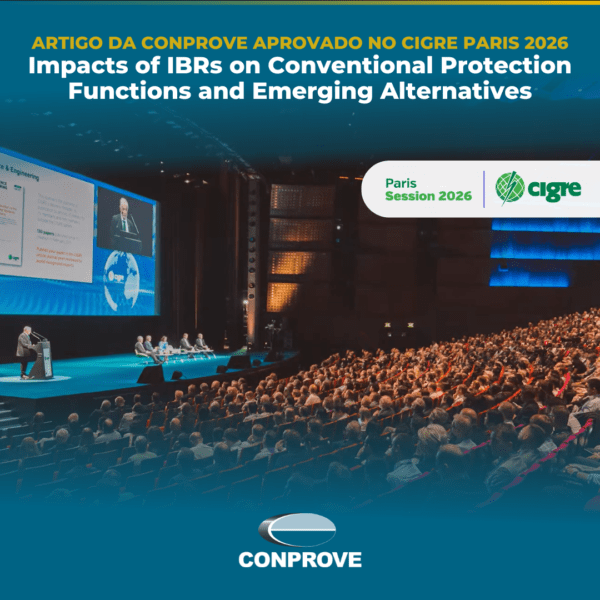






The large-scale integration of Inverter-Based Resources (IBRs) — such as wind and solar plants connected through converters — is changing the way the power system behaves during disturbances. This brings important benefits to the energy transition, but it also creates a technical point of attention: traditional fault location methods, well established in networks with high participation of synchronous machines, may experience performance degradation in scenarios with a strong presence of IBRs.
This topic is discussed in depth in Conprove’s article:
Why does fault location become more complex with IBRs?
In conventional systems, the short-circuit contribution of synchronous generators tends to be higher and more predictable, which favors algorithms based on electrical quantities (voltage/current) and line models. IBRs, on the other hand:
- limit fault current (current controlled/limited by the converter)
- have control dynamics that may change the response during the fault
- may operate with strategies such as grid-following or grid-forming, affecting the waveform and the event “profile”
- make some traditional indicators less “clean” for estimating the distance to the fault
In practice, this may impact the reliability and repeatability of fault location, especially when the network becomes more inverter-dominant.
Impacts on the most widely used methods
1) Methods based on impedance / phasors
These methods are widely used because of their simplicity and integration with relays and recorders. However, with IBRs, they may suffer from:
- estimation errors due to changes in the V/I relationship during the fault
- greater sensitivity to fault resistance, infeed/outfeed, and operating conditions
- greater variation between events, depending on converter control and point of connection
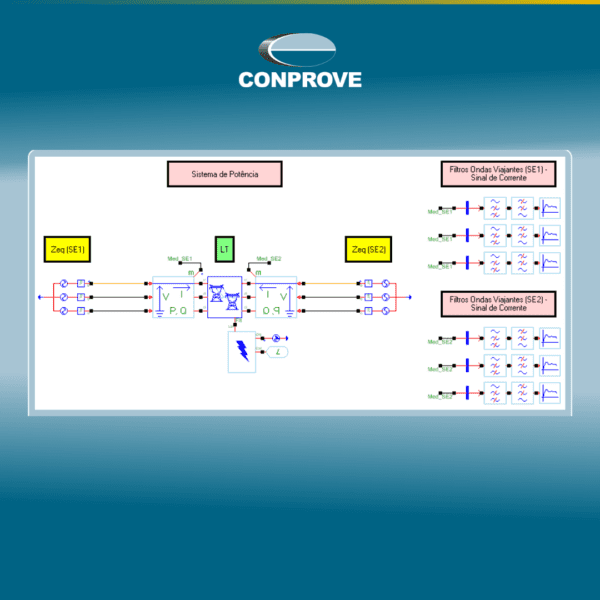
2) Traveling Waves (TW) methods
TW methods tend to be very accurate when there is good surge observability and high-quality acquisition/time synchronization. In IBR scenarios, typical challenges include:
- greater complexity in identifying events and reflections in specific cases
- the need for robust synchronization and adequate instrumentation
- greater requirements for measurement and processing quality
3) Single-ended vs Double-ended
Single-ended (one terminal): simpler to implement, but it may be more sensitive to the system’s “signature” with IBRs.
Double-ended (two terminals): usually gains robustness by combining measurements from both ends, but it requires well-implemented communication and synchronization.
Trends and practical paths to increase robustness
The article highlights — and the market reinforces — a clear direction: hybrid approaches and more instrumented architectures.
Some strong trends include:
- multi-method strategies (combining phasors + TW + consistency logic)
- greater use of synchronized measurements (e.g., PMU/high-precision time)
- systematic validation through reproducible tests, with technical evidence and standardized reports
- evolution of algorithms to better handle current limitation and IBR control dynamics
- increased use of high-rate data and better time-engineering practices (synchronization)
Engineering checklist (what to review in your project/routine)
For protection, automation, and commissioning teams, it is worth reviewing:
- Transmission corridor topology and IBR penetration level
- Synchronization requirements (time) and measurement quality
- Criteria for choosing between single-ended and double-ended (is communication available? latency? reliability?)
- Validation of the method under different conditions: high Rf, load variation, different IBR generation levels
- Existence of test procedures and reports that ensure traceability and repeatability
Conclusion
Fault location remains a critical resource for reducing restoration time, guiding field crews, and supporting system reliability. With the expansion of IBRs, the point is not to “replace everything,” but rather to evolve criteria, instrumentation, and validation, adopting more robust and demonstrable approaches.
For a complete view of the challenges and trends, read the article: