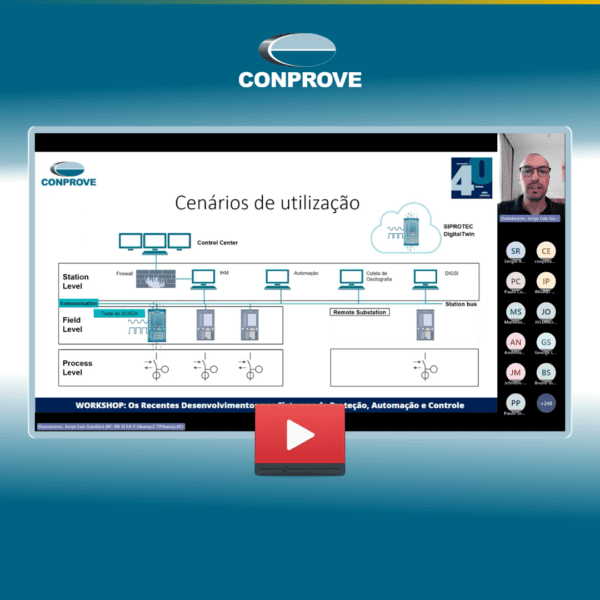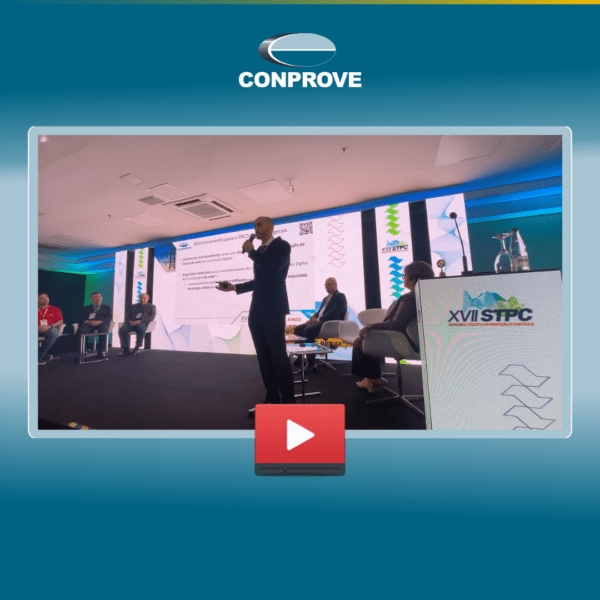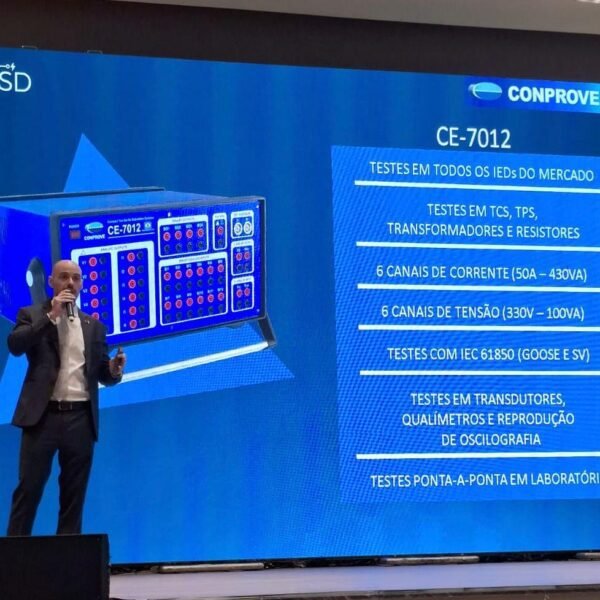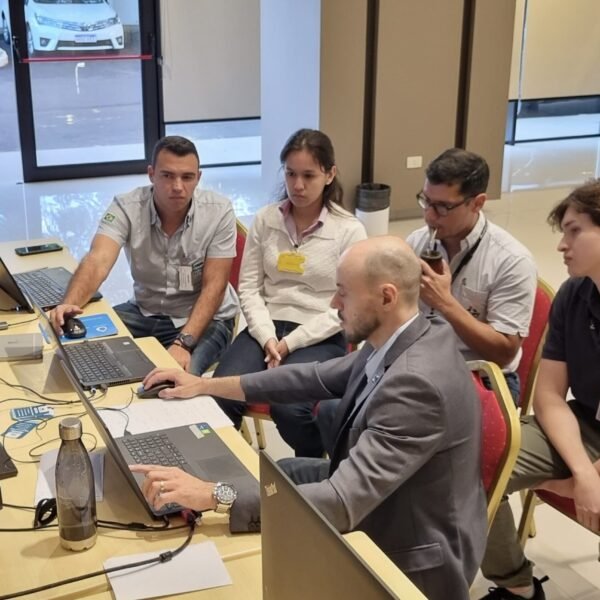





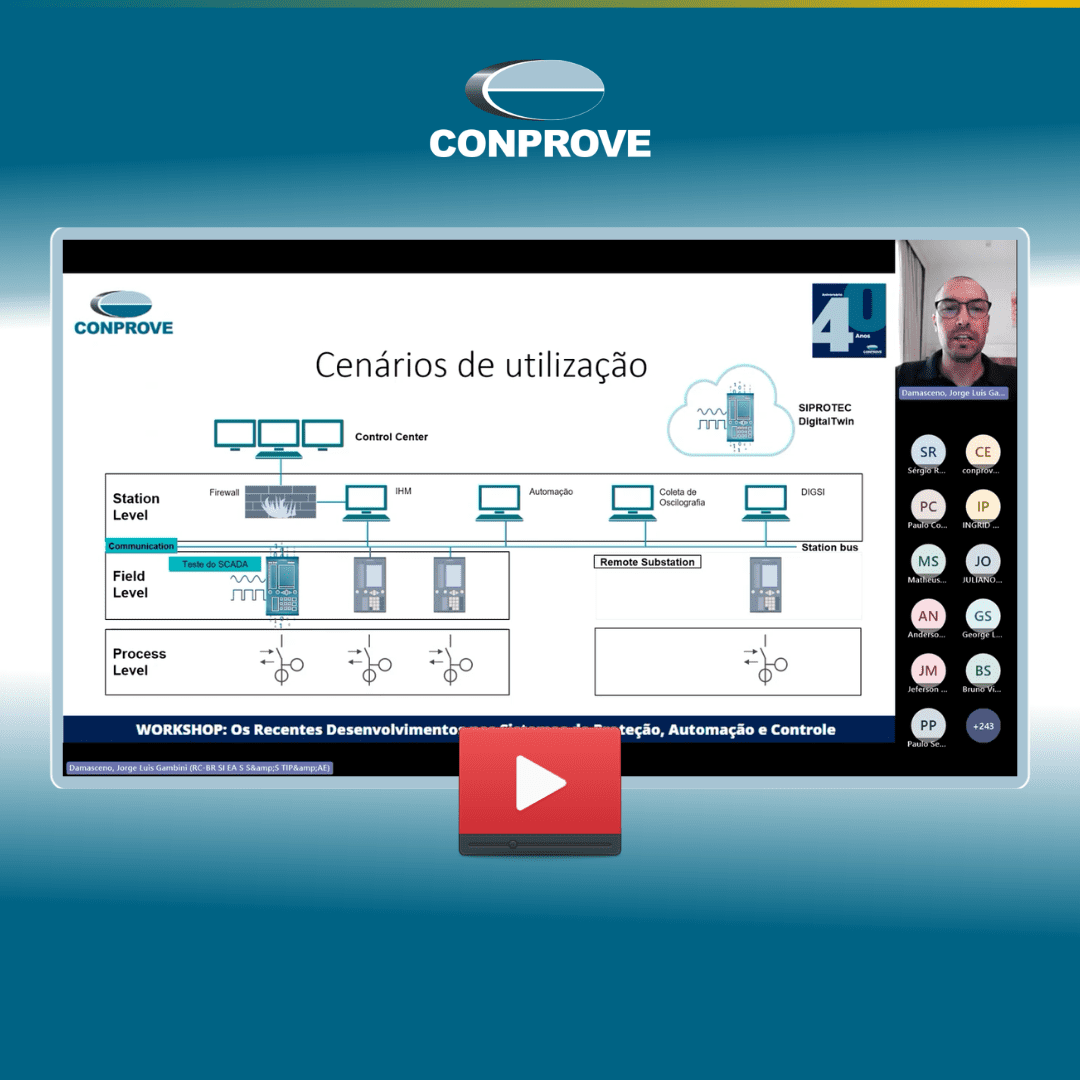
The application of Digital Twins in protection and control testing has been gaining increasing relevance in the power sector by enabling faster, more predictable, and more efficient validations. During the Conprove Workshop, Jorge Damasceno, representing Siemens, presented a practical perspective on how this technology can transform engineering, parameterization, and testing processes for relays and automation systems.
In practical terms, a Digital Twin can be understood as a virtual representation of a physical device or a real process, used to simulate behavior, anticipate scenarios, and optimize technical decisions. Within power systems, this approach significantly expands analysis capabilities, reduces rework, and improves reliability during implementation and commissioning stages.
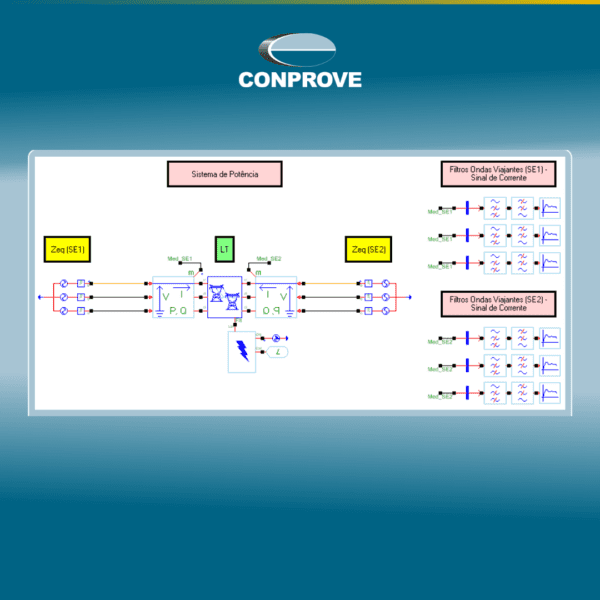
During the presentation, it was highlighted that the workflow can begin with simulation software responsible for calculating protection settings and exporting the engineering configuration to DIGSI. Then, files generated in CONTRADE format can be sent to the Digital Twin environment, where relay behavior is evaluated even before being applied to physical equipment. This allows inconsistencies to be identified during the design phase, reducing costs and avoiding implementation delays.
One of the main advantages of this approach is the ability to test logic, reproduce oscillography signals, validate closed-loop tests, and even perform integrations with external software through VPN connections. In more advanced scenarios, it is also possible to interact with supervisory systems, HMI, GOOSE, MMS, and other Ethernet protocols, expanding validation capabilities in digital environments.
Another relevant aspect is the use of Digital Twins in SCADA, automation, and communication testing between devices. Instead of depending exclusively on the physical availability of all relays and panels, part of the system can be simulated while communication between virtual and real elements is tested. This flexibility is especially valuable for expansions, staged FATs, and projects where part of the infrastructure is still unavailable.
In practice, Digital Twins help reduce logistics costs, avoid temporary wiring installations, eliminate the need for additional hardware, and accelerate fault identification. The earlier a problem is detected, the lower the impact on schedules, panel delivery, and system energization.
The technology also supports early validation during pre-sales and application engineering stages, allowing projects to be presented to customers with greater confidence and lower risk of surprises during final implementation. In more complex projects, this represents an important competitive advantage for both engineering and operations.
The trend is clear: Digital Twins are becoming a strategic tool for increasing reliability, efficiency, and intelligence in protection and control testing. In an increasingly demanding sector, anticipating failures and validating scenarios virtually is no longer a differentiator — it has become a technical necessity.
Watch the full video: