





One of the most powerful mechanisms of IEC 61850 for secure testing is the IED’s Simulation Mode.
But what does it mean to put an IED in simulation mode?
Practical Definition
When the IED is in Simulation Mode:
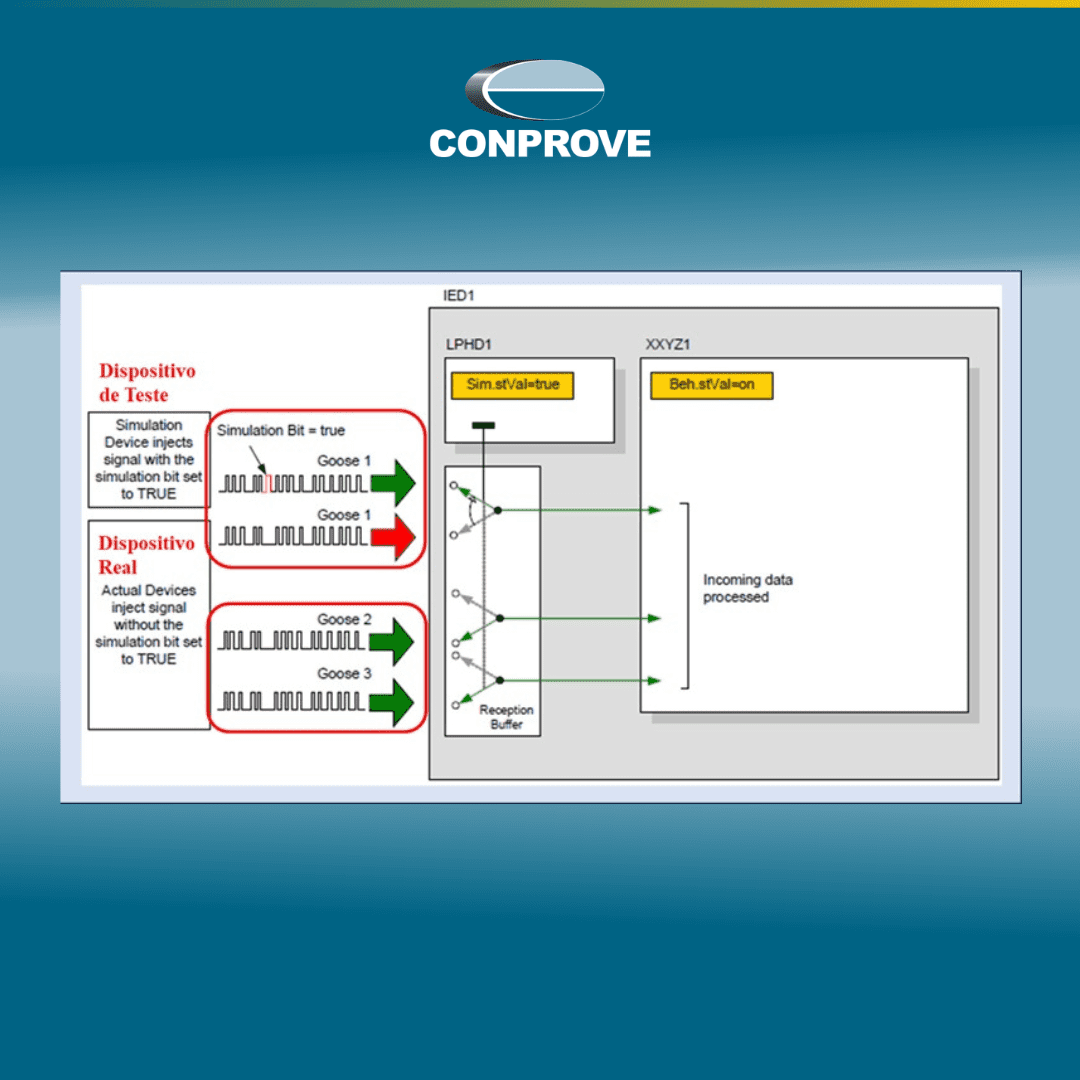
It processes simulated GOOSE and/or Sampled Values frames;
These frames are published by test devices or software;
The state is indicated by: LPHD.Sim.StVal = TRUE.
That is, the equipment “knows” that it is participating in a test environment.
How does the standard ensure the separation between real and simulated data?
Test frames must explicitly signal that they are simulated through:
simulation bit (and simulation flag in GOOSE);
test bit in the data quality field.
In addition:
The subscriber IED must be in simulation mode;
Frames published by an IED in simulation do not carry the simulation bit, only the test bit.
Intelligent IED behavior
When in simulation mode:
If it receives a simulated and a real frame at the same time: it processes only the simulated frame;
If it receives only real frames: it should process them normally;
It only prioritizes the real frame again when it exits simulation mode.
This mechanism is essential to allow realistic testing without unduly interfering with the system’s operation.
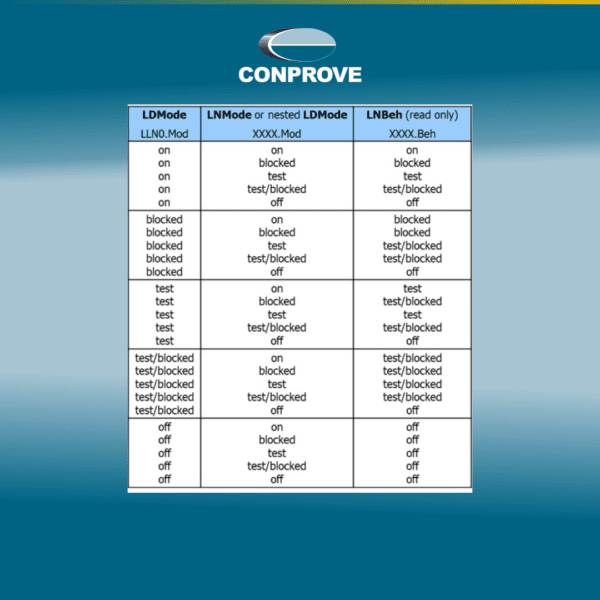
In the next post, we will talk about Mode, Behavior, and how to avoid accidental trips during testing—a critical point in substations in service.