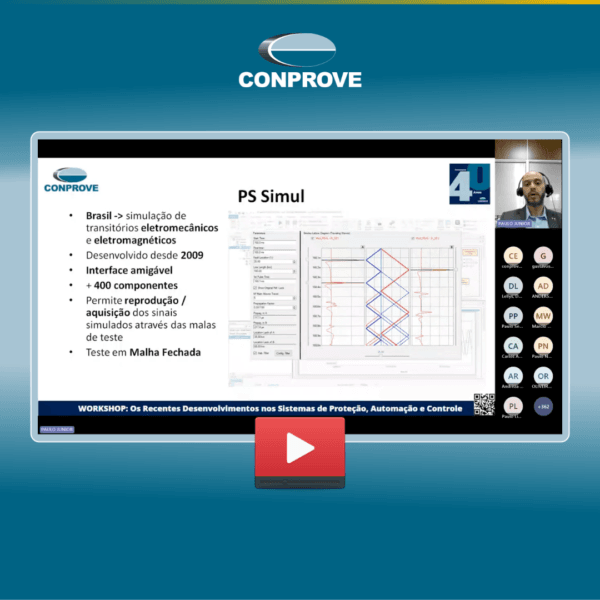







PS SIMUL was designed to unite numerical precision, high performance, and ease of use in power system studies and control. With an intuitive interface, extensive component library, and native integrations for bench and field testing, it accelerates the complete cycle: modeling → simulation → analysis → validation.
Saiba mais:
Why PS SIMUL
- Real productivity: fully customizable control panel, allowing operational condition variation without altering circuit diagrams
- Precision and stability: hybrid numerical method (Trapezoidal + Interpolation + Euler) that mitigates oscillations during switching and improves convergence
- Study scalability: global variables for centralized adjustments and automated multiple testing (batch variation of one or more system constants)
- Evidence-oriented workflow: internal measurements, automatic evaluations via parameterized logic, complete report generation, and password-protected files
Features that make the difference
- Fault injection without manual line cutting: inject faults directly (single-phase, two-phase, three-phase, phase-to-ground, phase-to-phase, etc.)
- Transformer winding short circuits: access to windings for advanced internal failure studies
- Detailed internal measurements: voltages, currents, powers, impedances, symmetric components, and more
- Standardized export: waveforms exported in COMTRADE and CSV formats
- Reports and traceability: structured documentation with graphs, parameters, and results
Library with over 400 components
- Lines and cables: concentrated and distributed parameter models
- Power and instrument transformers (PT/CT): with saturation curves
- Circuit breakers and switches: opening/closing time and current control
- Machines: synchronous, asynchronous, and DC
- Logic and control: decision blocks, filters, compensators, PID, control loops
- Power electronics: IGBT, MOSFET, Thyristor, Triac, and associated topologies
Visualization and analysis
- Waveforms: with symmetric component calculations, powers, and impedances
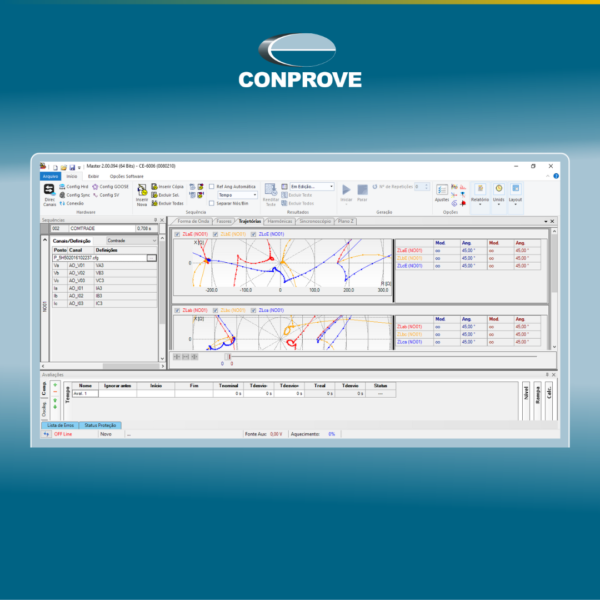
- Phasors and impedance trajectory: ideal for zone verification and coordination
- Harmonic decomposition: bar charts and indicators
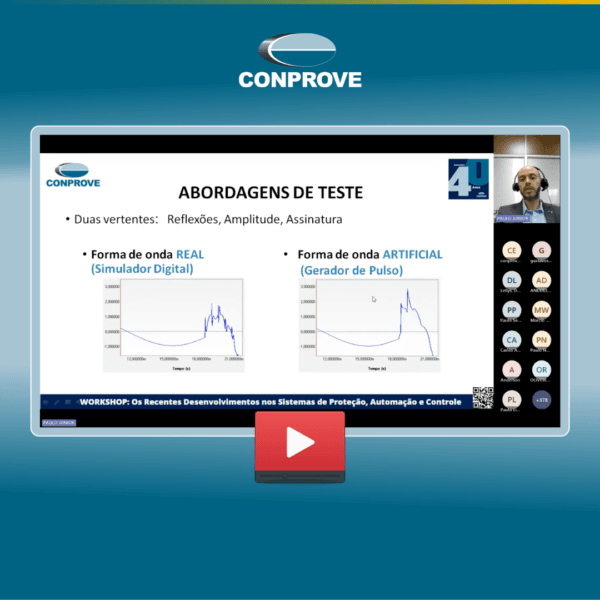
- Statistics module: XY, bar, and pie charts and compliance with IEC‑60255 (minimum, average, and maximum IED operation times as a function of fault location and SIR)
Integrations for practical validation
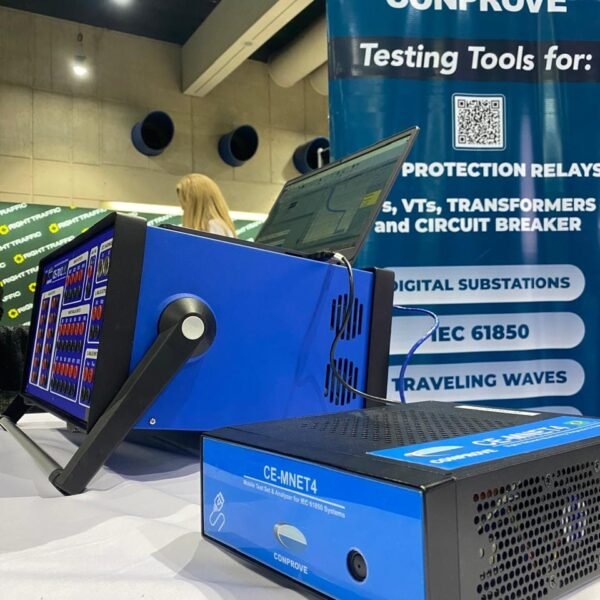
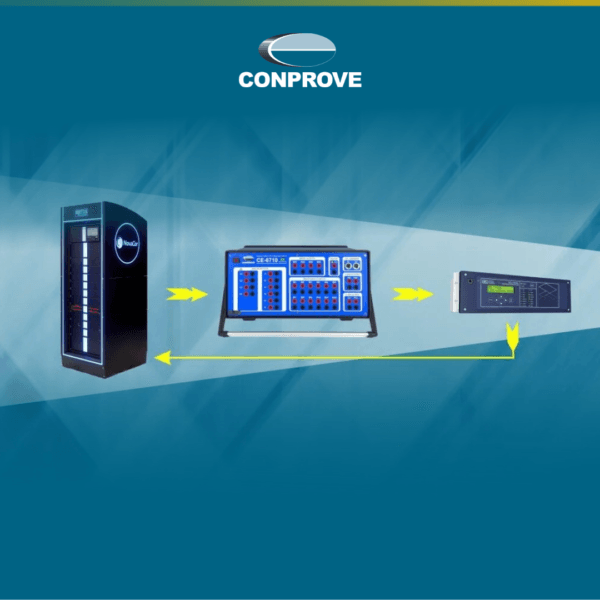
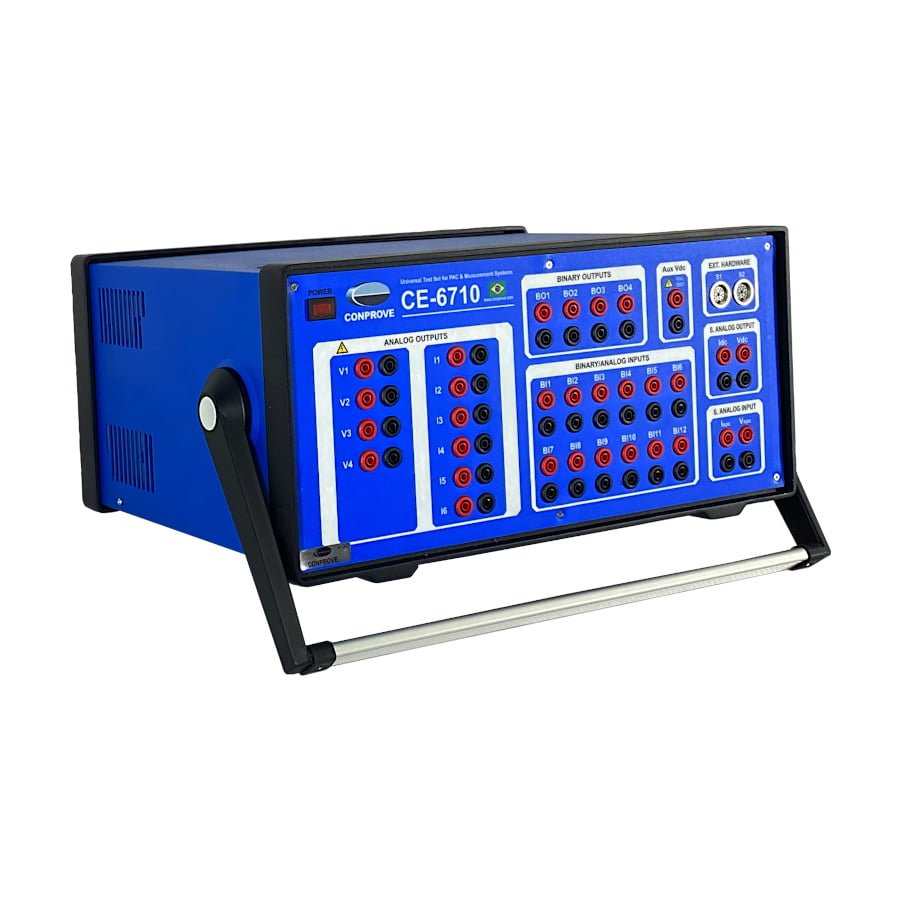
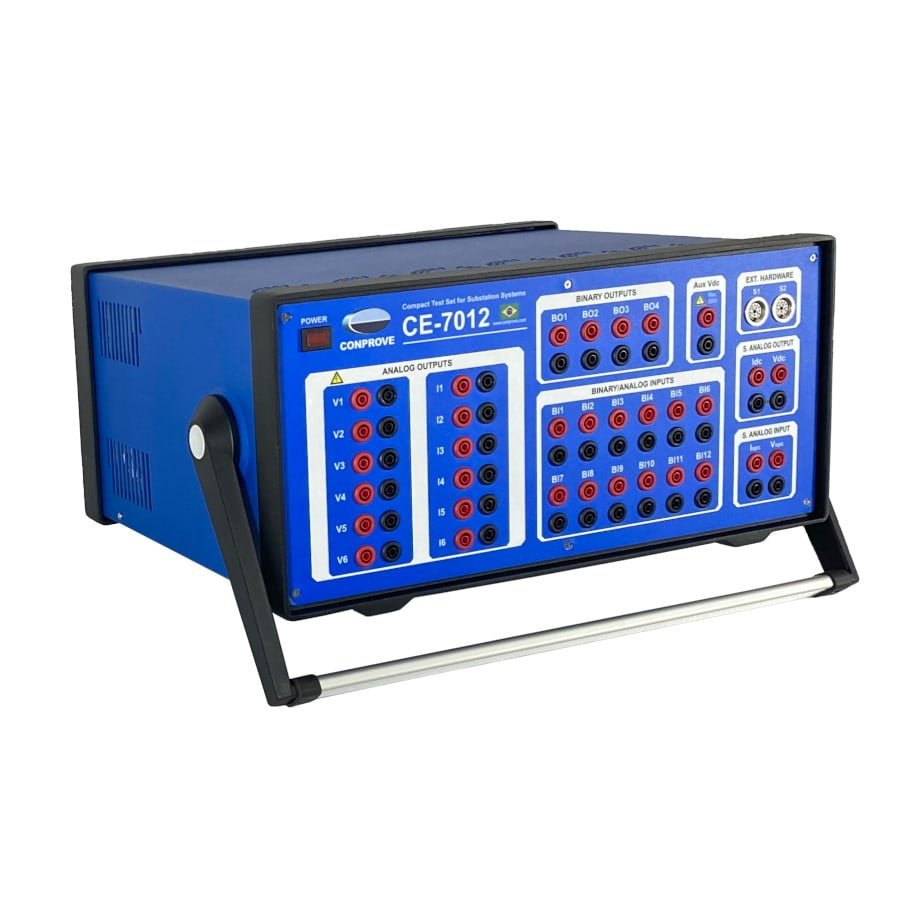
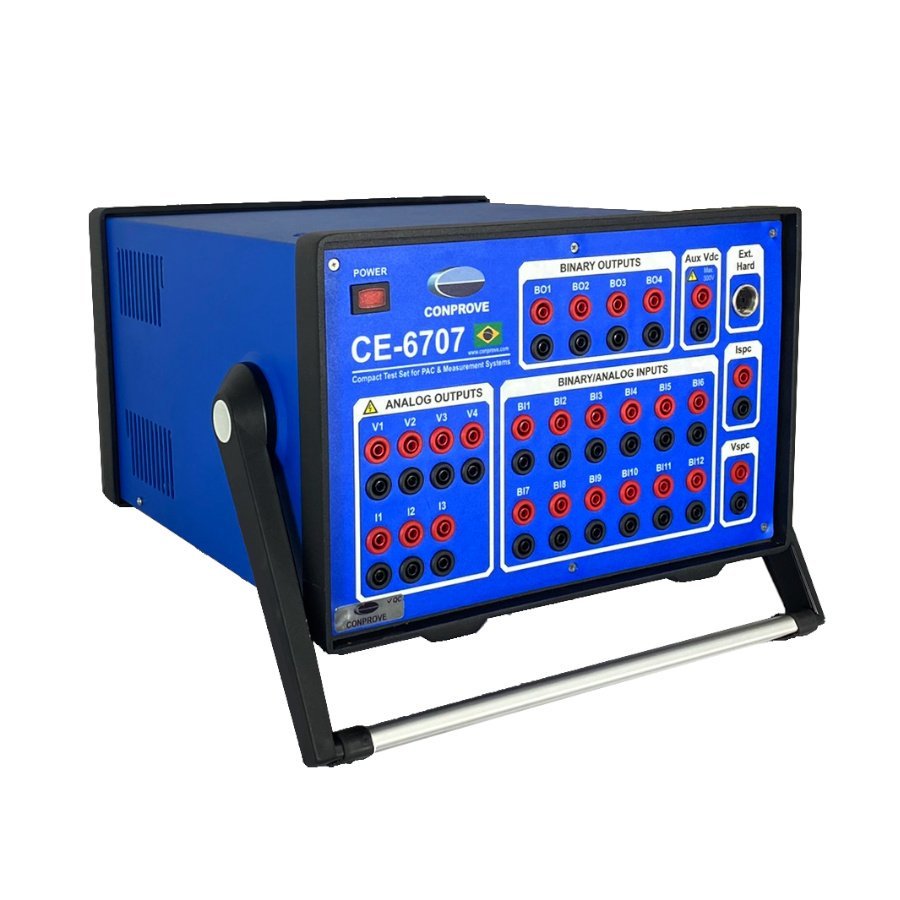
- CE‑70XX hardware family (Conprove): direct interaction to generate and inject simulated waveforms in the same environment, enabling closed-loop testing in stages and iterative processes without file export/import
- SIPROTEC DigitalTwin (Siemens): virtual testing and open/closed-loop testing via step-by-step method, through dedicated API between applications
Typical use cases
- Electromagnetic transient studies in switching, faults, and energizations
- Protection coordination and selectivity (curves, zones, margins)
- Evaluation of CT/PT saturation and impacts on measurement/protection
- Validation of control logic and compensation strategies
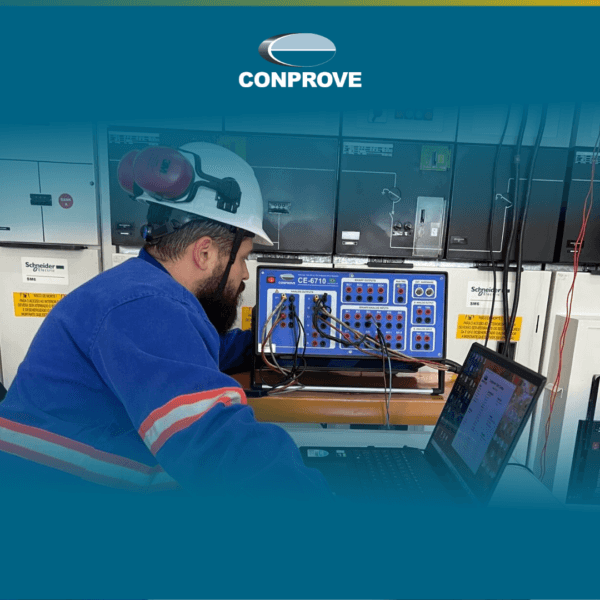
- Preparation of test plans with physical relay and IED injection
Benefits for your operation
- Reduced time in studies and test preparation
- Less rework thanks to scan automation and standardized reporting
- Greater reliability by integrating simulation, waveform generation, and physical testing
- Continuous training with example library, complete manual, and expert support
Getting started
- Explore the product page and example library
- Define a pilot study (e.g., protection coordination or transformer energization) and use global variables to sweep scenarios
- Integrate with the CE‑70XX to validate results in closed-loop and document everything in the integrated report
Learn more about PS SIMUL: