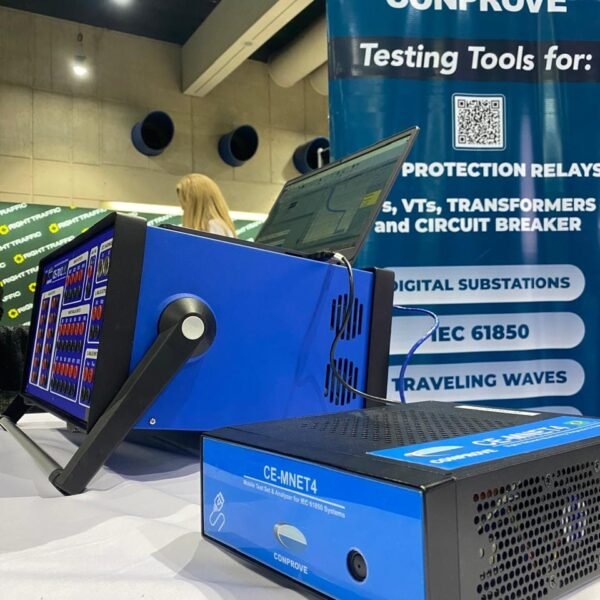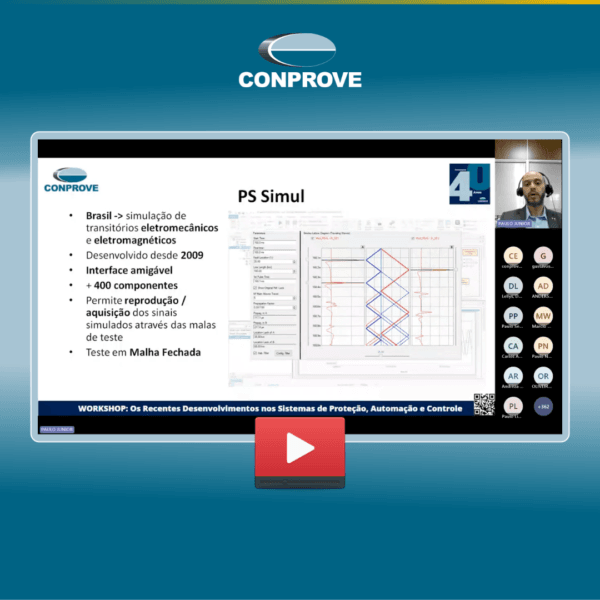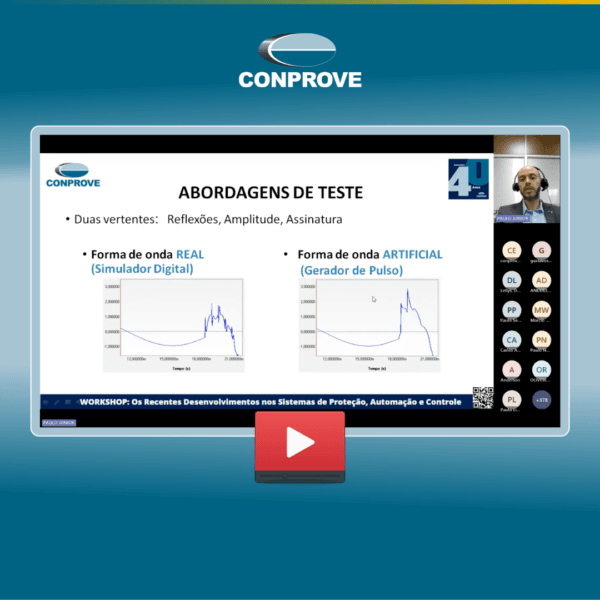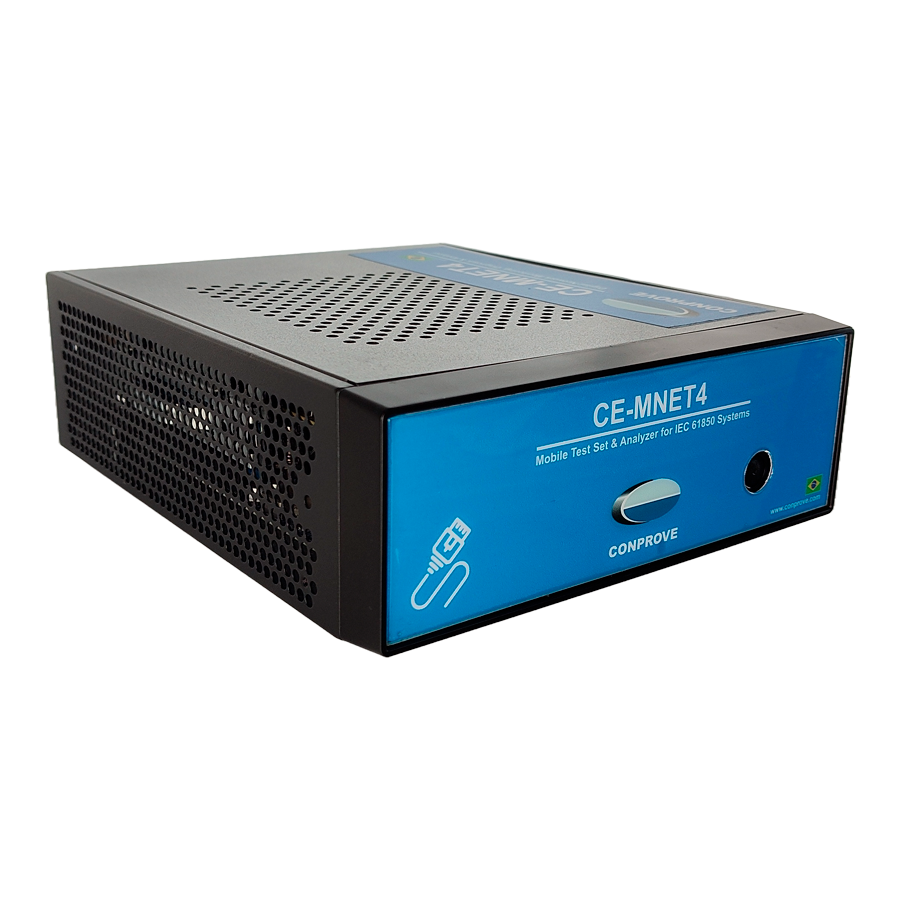






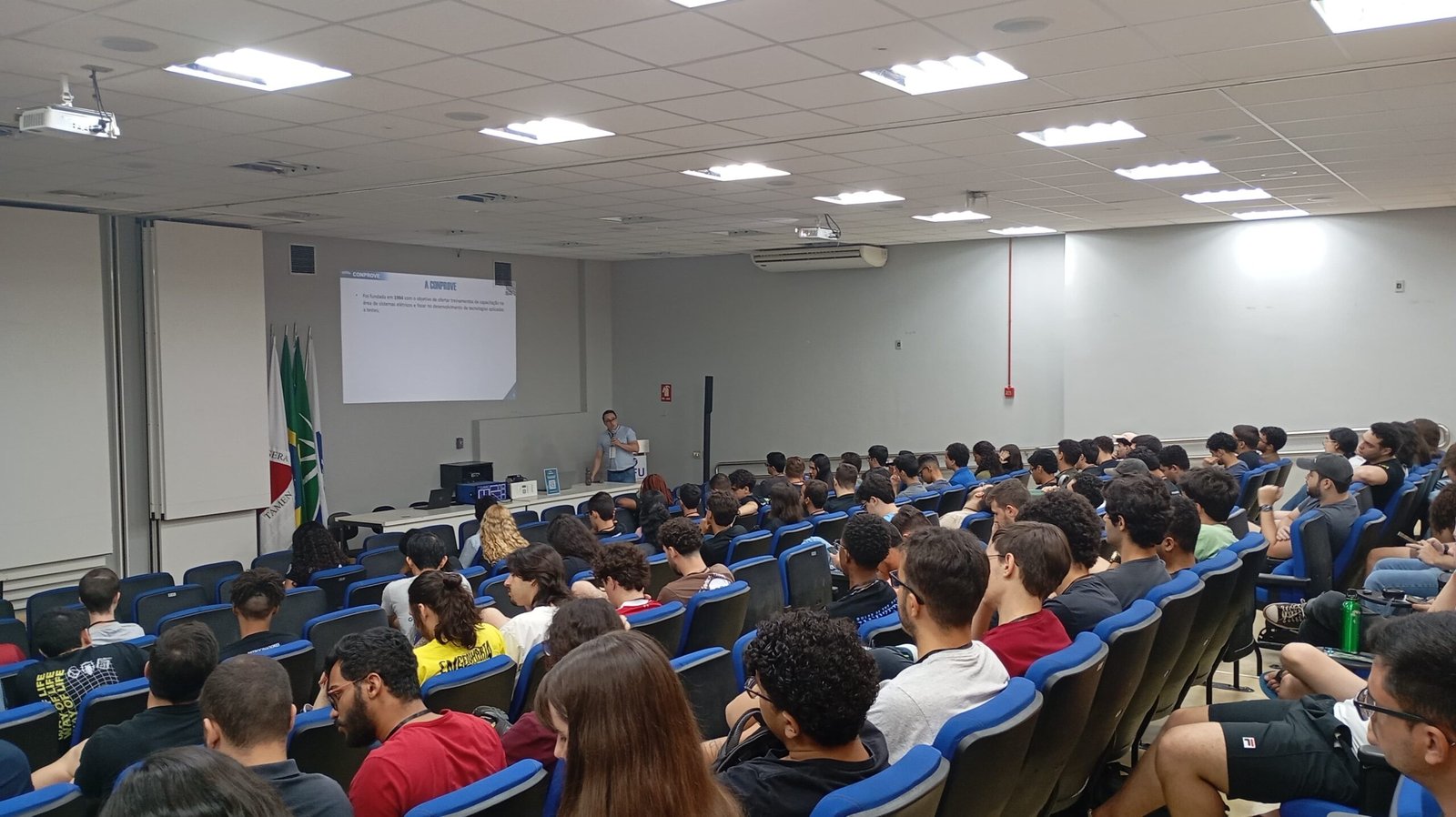
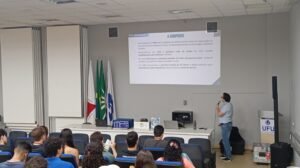
On November 11, 2025, Conprove participated in JEEL—the region’s largest Engineering and Technology event—at UFU (Uberlândia/MG), delivering the lecture: “Testing, Diagnostics, and Monitoring Solutions for Protection Systems.” The event brought together students and professionals around a shared mission: connecting people, the future, and innovation through practical content, technical visits, and high-level networking.
Context and purpose
- Enhance reliability, availability, and traceability of protection systems
- Demonstrate how structured testing, evidence-driven diagnostics, and continuous monitoringreduce downtime and accelerate decision-making
- Integrate classical methodologies with the reality of IEC 61850/IEC 61869–based digital substations



Technical lecture content
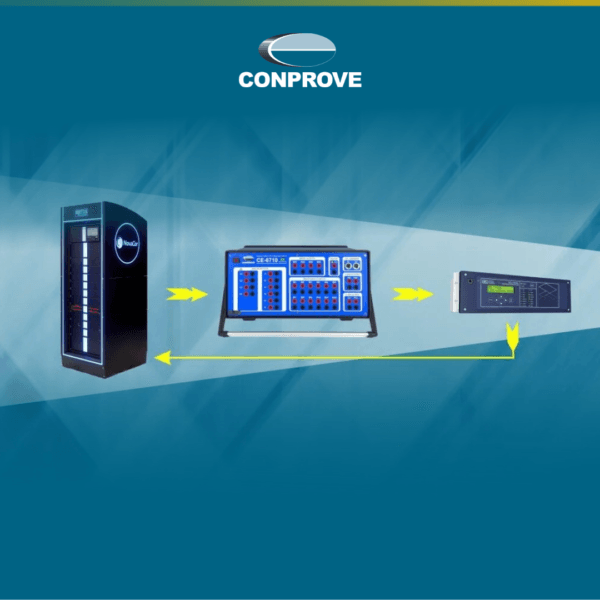
- End-to-end testing: methodologies for verifying logic, timing, and communication between terminals
- Test automation: standardization with sequences, acceptance criteria, and auditable reports
- Oscillographies and events: efficient record reading, root-cause identification, and KPI cross-correlation
- Digital substations: GOOSE and Sampled Values (SV) flows, latency, QoS, synchronism, and analog vs. digital comparisons
- FAT/SAT and evidence-based maintenance: practices to reduce rework and accelerate approvals
Practical applications and case studies
- Verification of protection functions (27/59, 50/51/67, 81, 87) with controlled sweeps and tolerances
- Timing comparison between physical contact and GOOSE event for architecture decisions
- Integration of testing with operational KPIs: latency, jitter, availability, PTP synchronism offsets
- Rapid post-event diagnostics with audit trails and reproducibility
Key takeaways
- Without standardization and continuous observability, reliability depends on luck—unacceptable in critical environments
- Automation and reporting elevate technical quality and reduce analysis time, from commissioning to maintenance
- Network design and traffic engineering (QoS, VLAN, synchronism) directly impact protection effectiveness
- Transition to hybrid/digital architectures requires metrics, comparative testing, and clear acceptance criteria
Impact for the JEEL community
- Students and professionals left with a “lab-to-field” roadmap focused on results
- Strengthened local ecosystem in power engineering, automation, and industrial networks
- High-quality networking for projects, internships, and R&D initiatives
Suggested next steps
- Implement a testing checklist and KPIs (FAT/SAT and routine)
- Map critical flows and review QoS/VLAN/synchronism in 61850/61869 environments
- Adopt test-sequence automation and standardized reporting for traceability
- Promote InCompany training focused on real asset portfolios and operational goals
Want to bring this lecture, a practical workshop, or a training track to your team? We can build a tailored program with test plans, automation, and performance metrics aligned to your operations.
Recognition
Our gratitude to UFU and the JEEL organizing team for the warm reception and high-level technical exchange. We remain committed to driving safety, efficiency, and innovation in the power sector.