




CIGRE 2025 Paper: experiences in IED interoperability testing focused on time synchronization
The evolution of Protection, Automation, and Control Systems (PACS), driven by the IEC 61850 standard, has accelerated the deployment of digital substations worldwide. In this scenario, interoperability between IEDs from different manufacturers and communication behavior within the Process Bus have become central factors for system reliability and performance.
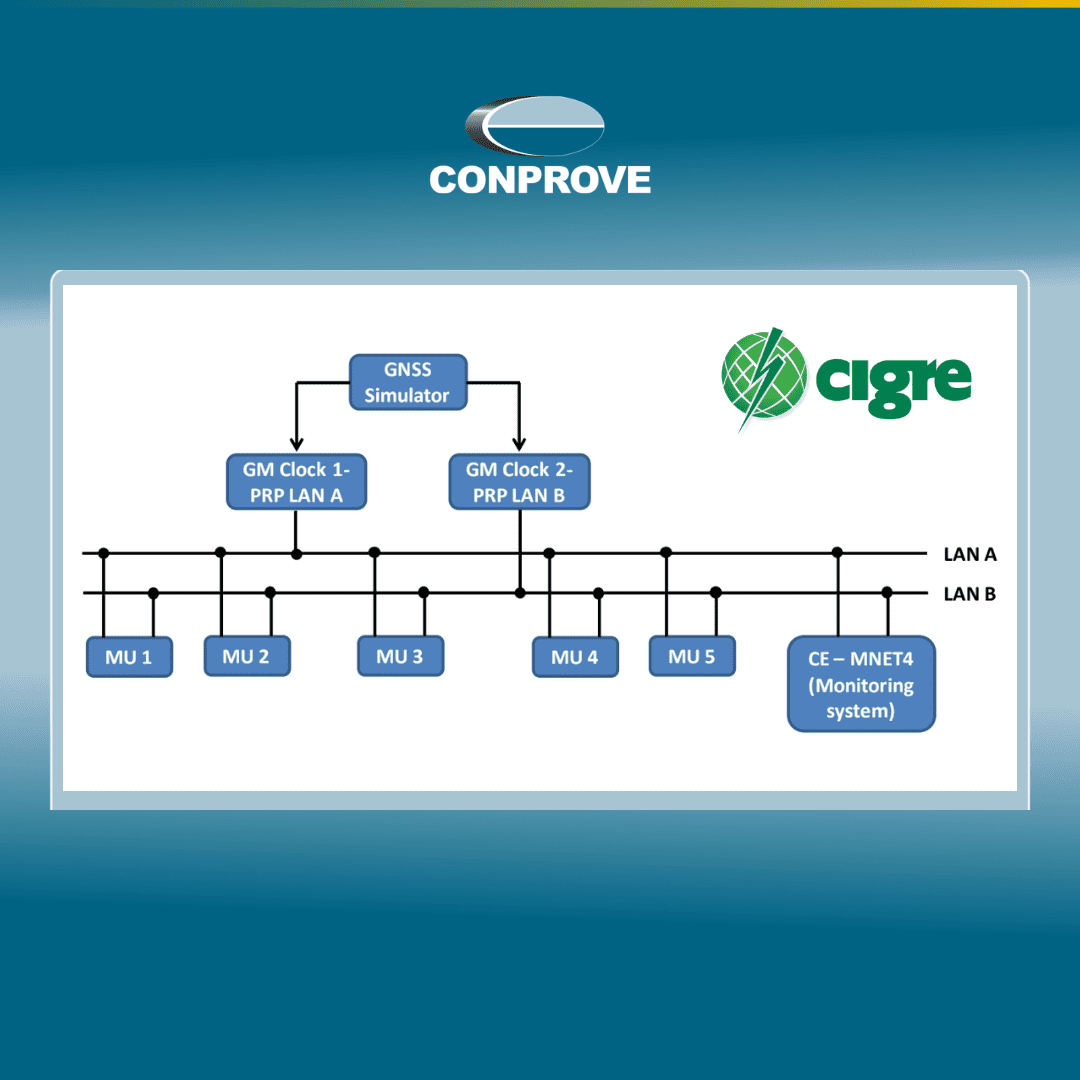
The CIGRE 2025 Paper presents practical experiences from IED interoperability testing, with a special focus on PTP (Precision Time Protocol) synchronization behavior and its impact on the process bus. In digital environments, where information traffic is critical to operation, any timing deviation can compromise communication quality and the consistency of protection and automation functions.
To evaluate this context, tests known as ELIA Tests (Equipment-Level Integration Accuracy) were performed. Their purpose is to verify the accuracy and effectiveness of integrated systems. These tests are essential for analyzing how IEDs behave in real integration scenarios, especially when devices from different manufacturers exchange information through IEC 61850 protocols.
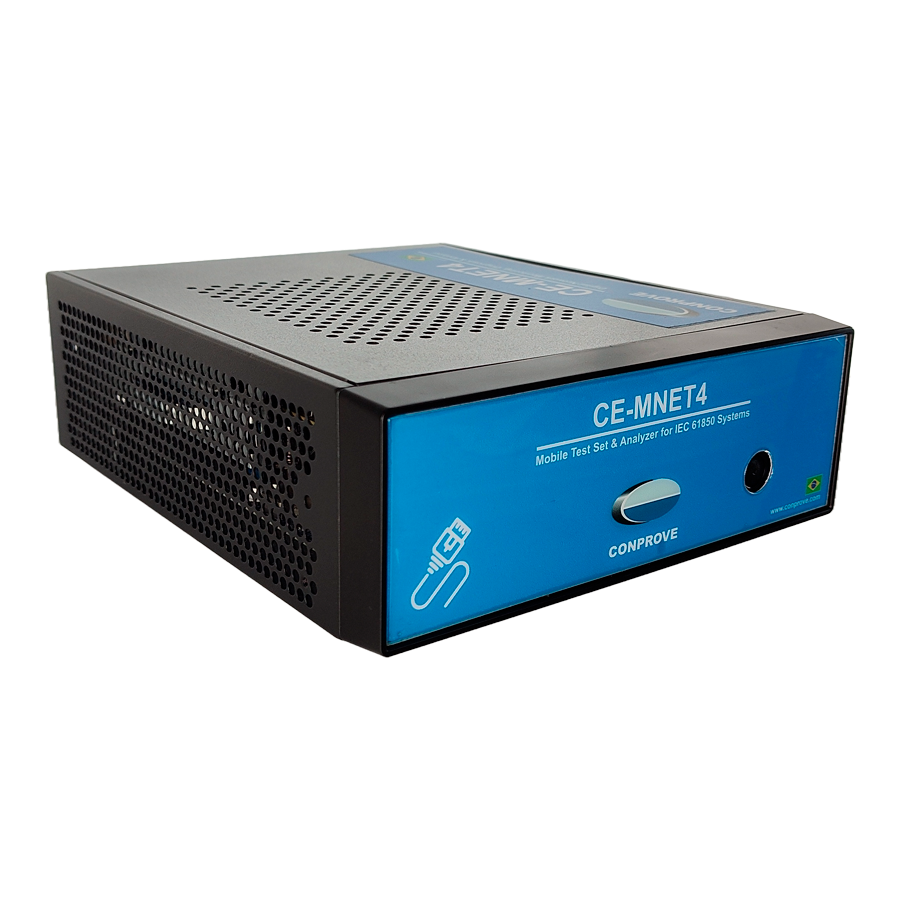
Another important aspect highlighted in the paper is the use of specialized tools for communication network verification and supervision event monitoring. Through these analyses, it is possible to observe the effects on IEDs and understand how the system reacts to variations in synchronization, communication performance, and device integration.
In digital substations, this type of assessment is essential for anticipating failures, reducing operational risks, and increasing overall system reliability. The more robust the testing process, the greater the confidence in the deployment and operation of IEC 61850-based solutions.
Learn more:
Experiences in Interoperability Testing of IEDs Focusing on Time Synchronization Behavior