





Digital substations based on IEC 61850 have raised the standard of interoperability, traceability, and efficiency in protection, control, and metering. At the same time, they have introduced a new challenge for engineering and operations: system performance now depends directly on the quality of communication in the Process Bus.
In other words, it is not enough to simply “have communication running.” It is necessary to test, monitor, and diagnosecontinuously to ensure that GOOSE, Sampled Values, and time synchronization remain consistent — especially during commissioning, maintenance, and troubleshooting activities.
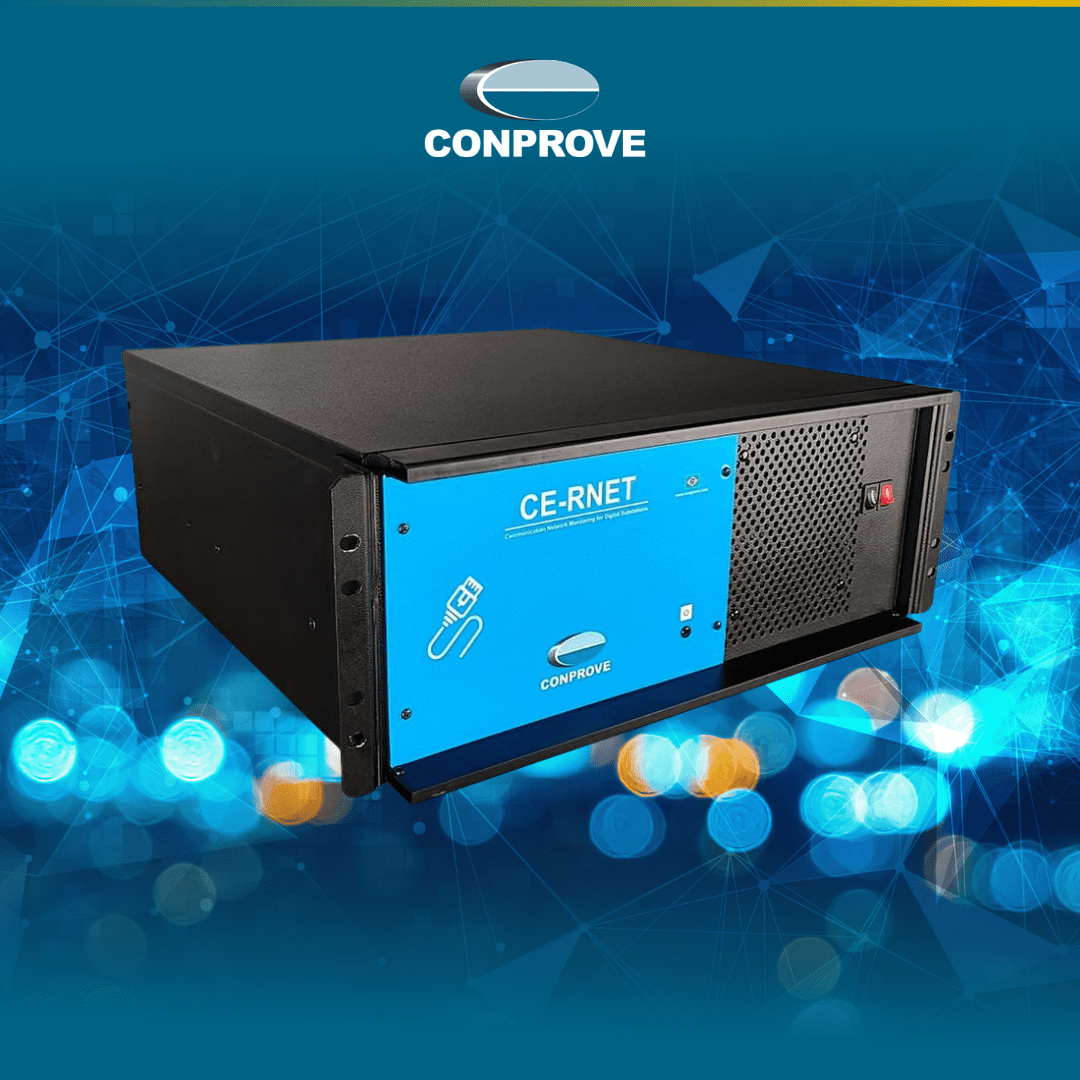
This is exactly the context in which the CE-RNET4 stands out: a rack-mounted tester that combines, in a single piece of equipment, testing, diagnostics, and monitoring resources for digital substations, with full support for IEC 61850 and IEC 61869 standards.
Learn more about the CE-RNET4:
What is the CE-RNET4 (and why is it “versatile”)
The CE-RNET4 is a tool designed to meet different needs throughout the lifecycle of an IEC 61850 system — from initial validation to permanent network monitoring.
It brings together multiple functionalities in a single instrument for power system testing, allowing the technical team to have:
- a platform to actively interact with network traffic (publishing and subscribing to messages), and
- a mechanism to observe and diagnose the network in operation (packet capture and analysis).
This combination is what makes the CE-RNET4 especially useful in environments where outage window time, technical evidence, and operational reliability are key requirements.
Publishing and subscribing to messages: GOOSE and Sampled Values
In digital substations, two types of messages are among the most critical for operation and protection:
- GOOSE (high-priority events and commands)
- Sampled Values (SV) (digitized samples for metering/protection)
The CE-RNET4 is capable of publishing and subscribing to both GOOSE and SV, according to IEC 61850 / IEC 61869standards, which opens important possibilities for:
- engineering validation and subscription/publication checks
- interoperability and message consistency testing
- scenario simulation and functional checks during commissioning
- verification of actual Process Bus behavior
Time synchronization with PTP (IEEE 1588): when time is part of the test
In a digital environment, time is a functional requirement. If synchronization fails, the system may lose consistency — and the consequence may appear as instability, sampling errors, alarms, or unexpected behavior in time-dependent functions.
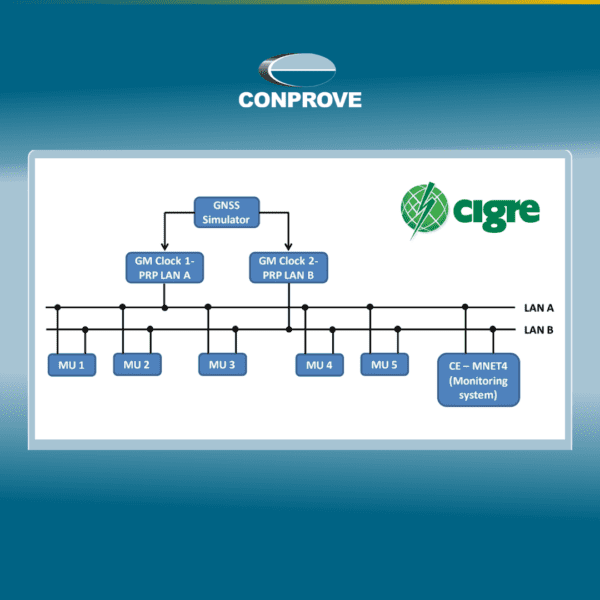
The CE-RNET4 enables time synchronization through PTP (IEEE 1588) and, in the diagnostic context, also supports synchronization assessment by observing the PTP packets from the Grandmaster.
This helps the team answer essential questions such as:
- is synchronization stable and consistent?
- are there variations impacting SV/GOOSE and bus performance?
- is the observed time behavior aligned with the project expectations?
Monitoring modes: capture, analyze, and accelerate troubleshooting
In addition to acting on messages, the CE-RNET4 includes monitoring modes that capture substation network trafficand analyze the packets circulating through it. This is where the tool becomes a troubleshooting accelerator.
With the captured messages, it is possible to:
- perform statistical traffic analysis
- detect packet issues and delays
- assess message synchronization through Grandmaster PTP packets
- verify whether there are lost or not-sent messages
- detect the presence of orphans
- evaluate the overall performance of the substation Process Bus
In practice, this turns network diagnostics into a more objective process, based on data and evidence — reducing guesswork and accelerating resolution.
Practical benefits for engineering, commissioning, and operations
By combining active testing and analytical monitoring, the CE-RNET4 tends to deliver direct gains in:
- reliability (a more observable and controllable network)
- commissioning productivity (faster and more consistent validations)
- risk reduction (early detection of faults and degradations)
- traceability (technical evidence for acceptance, auditing, and post-event analysis)
- standardization (replicable procedures across teams and projects)
Conclusion
The CE-RNET4 is a robust solution for teams that need to raise the level of testing, diagnostics, and monitoring in digital substations — with a focus on IEC 61850 / IEC 61869, GOOSE/Sampled Values messages, and PTP (IEEE 1588) synchronization. By capturing and analyzing Process Bus traffic, it supports troubleshooting with technical evidence and enables evaluation of overall network performance.
Learn more: