





LPITs Testing
What are LPITs?
Low Power Instrument Transformers (LPITs) are Non-Conventional Instrument Transformers (NCITs) with low-power outputs, designed to meet the operational requirements of substations, including digital substations based on the IEC 61850 standard. IEC 61869 states that to be considered an LPIT, the transformer must produce a maximum output power of only 1VA under nominal voltage and/or current conditions—making it smaller, lighter, and especially safer.
For current measurement, it’s common to use low-power inductive current transformers, Rogowski coils, or optical measurement using the Faraday effect. For voltage measurement, resistive, capacitive, or resistive-capacitive dividers are usually applied. The output from these low-power instrument transformers can be analog (low amplitude signals) or digital (via standardized or proprietary protocols). These devices are directly connected to Merging Units (MUs) via proprietary or standardized connections. The MU output is always standardized via Sampled Values.
Why test LPITs in Digital Substations?
Protection devices can fail for various reasons: natural wear of electronic or mechanical components, accidental failures, errors in embedded software algorithms, or parameterization mistakes. Therefore, periodic testing is essential, especially after updates or maintenance.
In digital substations, the test equipment must be able to assess the entire protection chain—from instrument transformers to MUs, IEDs, and breakers. The test tool must offer a complete solution including:
Analog outputs (current and voltage amplifiers);
Analog/binary inputs and binary outputs;
Low-power outputs;
Transducer measurements;
Full implementation of IEC 61850 protocols (GOOSE and SV publish/subscribe);
PTP and GNSS synchronization;
Network monitoring and diagnostics.
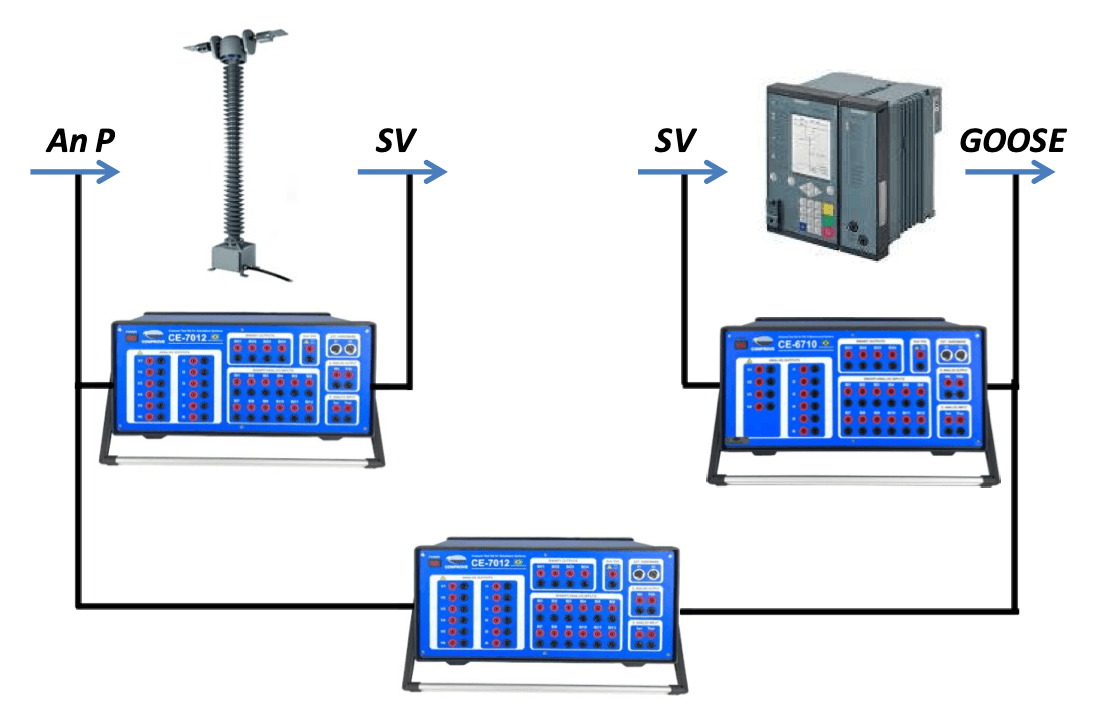
Various test combinations require this tool—such as analog injections, GOOSE/SV publishing and subscribing. The example below illustrates possible test setups involving LPIT and IED as Devices Under Test (DUT).

Types of Tests on LPITs
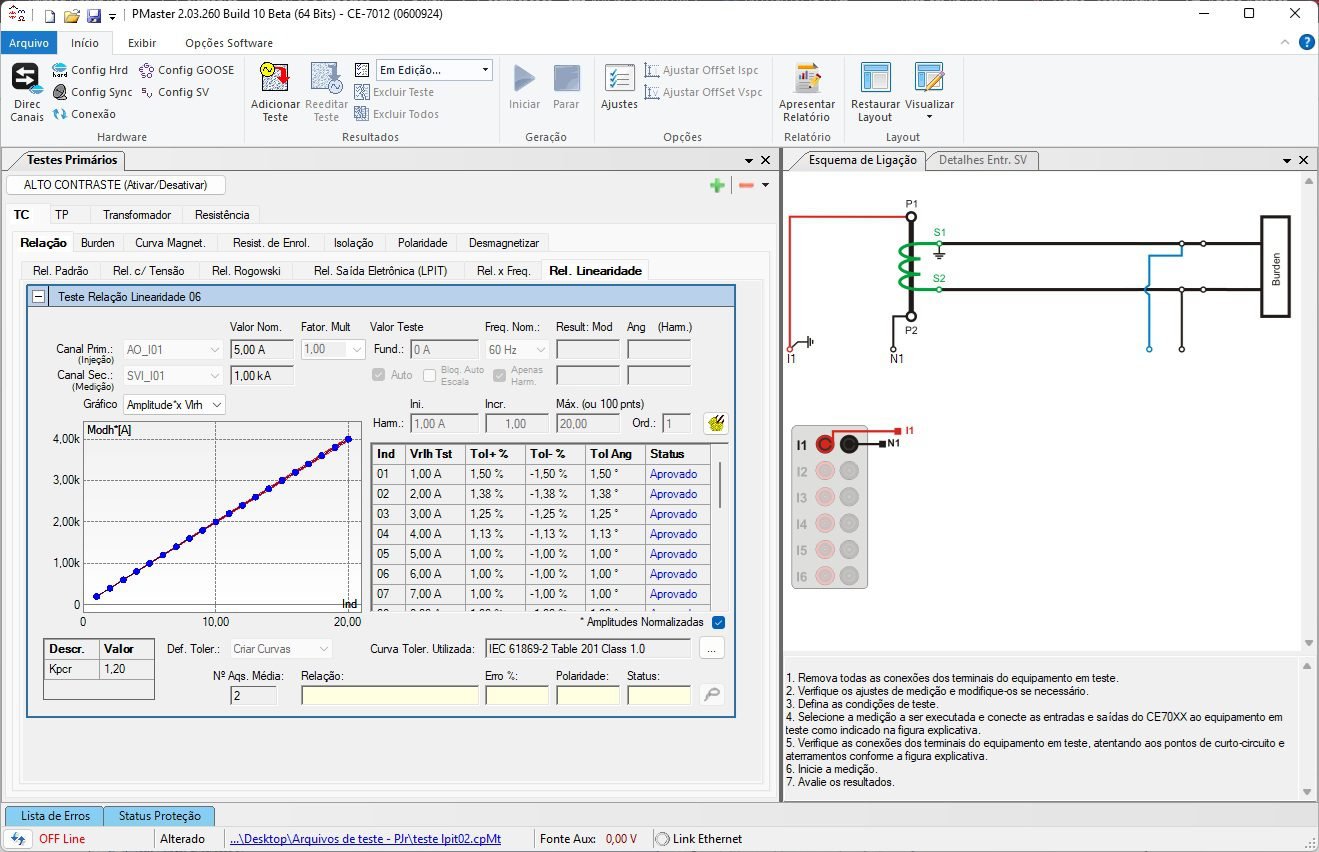
Linearity: Validates whether the MU reacts linearly in amplitude and angle to variations in injected analog signals.
Frequency Response: Verifies amplitude and angle errors when harmonics are present. Each harmonic order is analyzed separately.
Amplitude and Phase Accuracy: Examines MU output accuracy under steady-state signals for long durations.
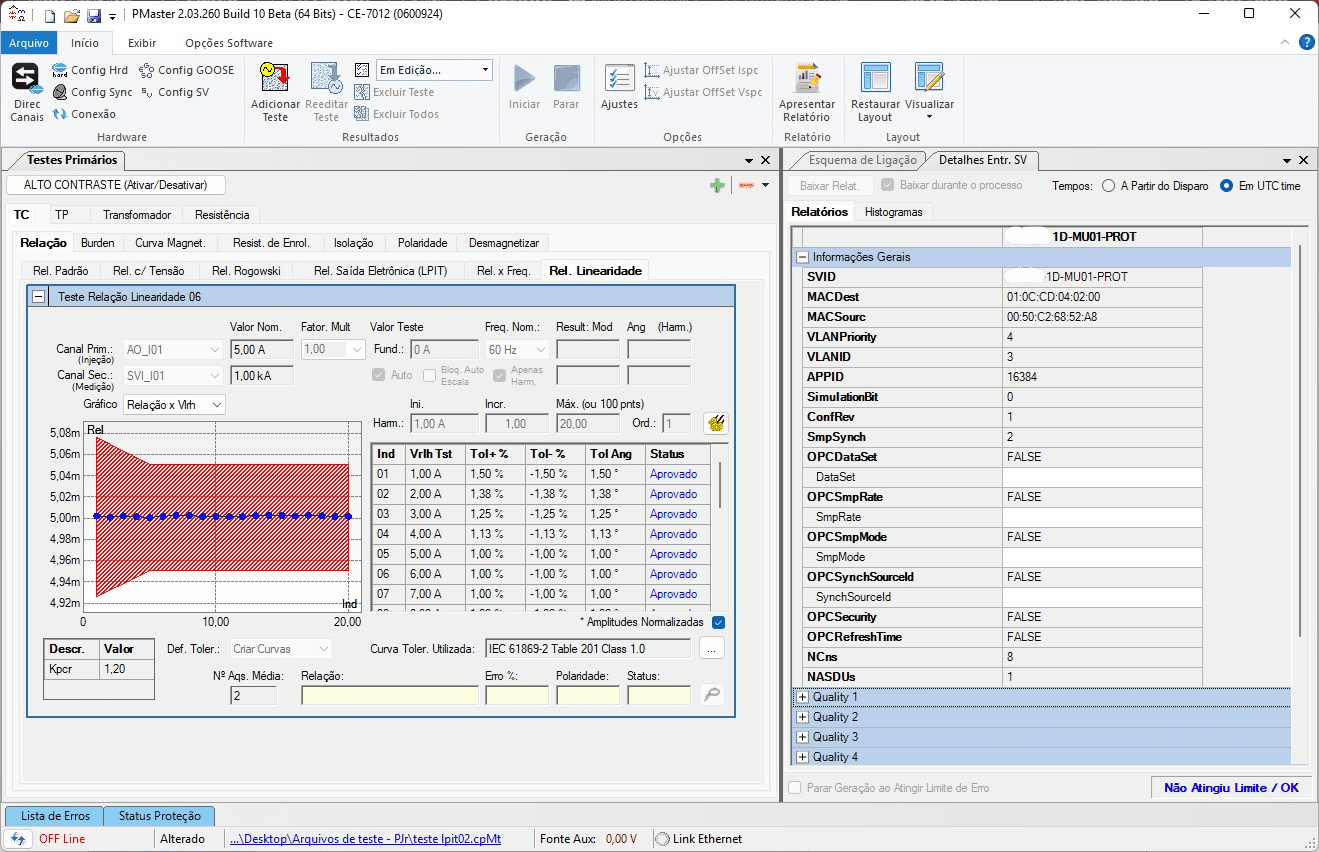
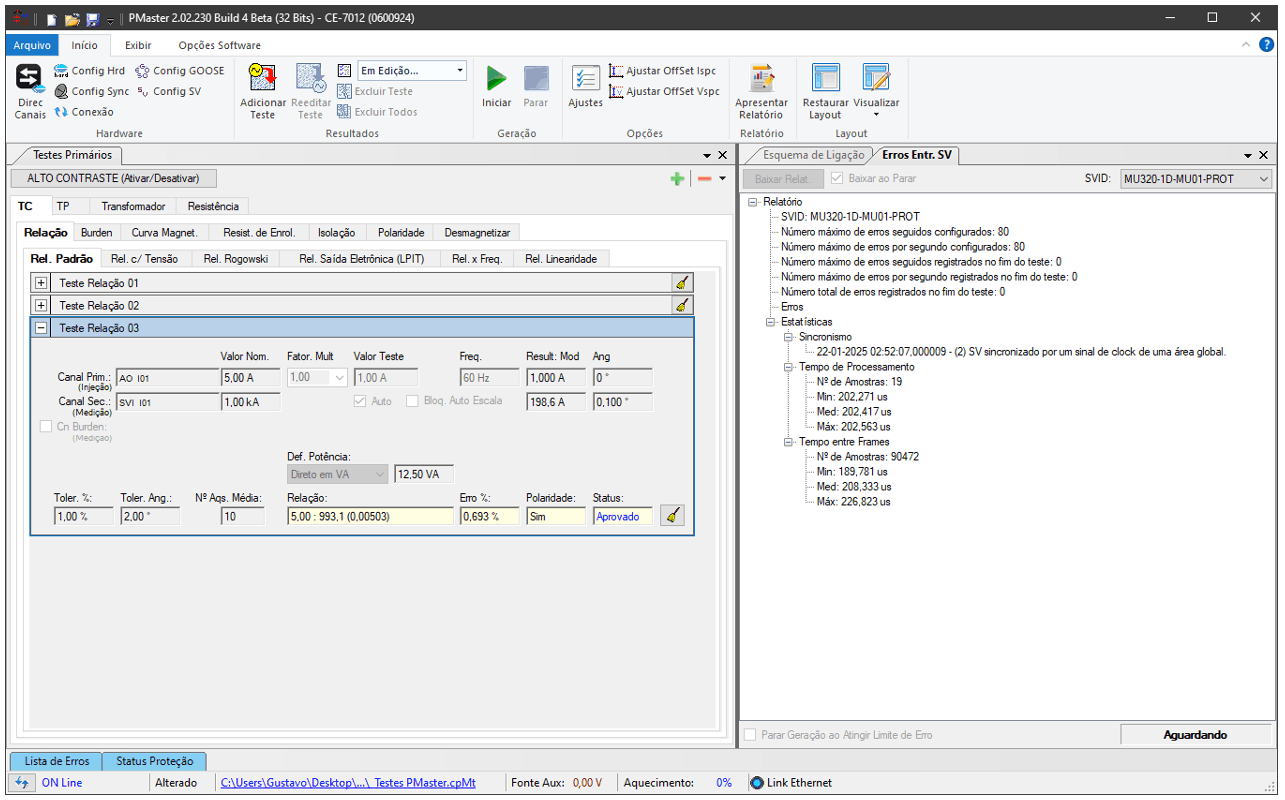
Error Monitoring: Detects lost, corrupted, duplicate, or delayed SV messages.
Time Statistics Monitoring: Evaluates inter-frame intervals and digitalization + network delay. Compliance with IEC 61850-5 Ed.2 and IEC 61869-9 Ed.1 (5 ms max).
Synchronization Monitoring: Assesses if SV sample timing is consistent, based on the SV sync flag.
How to Test LPITs
Testing all the above ensures that the LPIT and MU operate correctly, publishing reliable current and voltage data—essential for proper protection system response.
The test set must:
Inject precise analog signals with control over amplitude, angle, and harmonics;
Subscribe to SV frames via fiber or RJ45;
Process data with:
Oscillography,
Phasor diagrams,
Automatic error analysis,
Network diagnostics (lost, duplicate, out-of-order, or corrupted packets),
Time-based statistics.
Support multiple sync options (local, GNSS, PTP master/slave, Grandmaster);
Generate detailed editable reports.
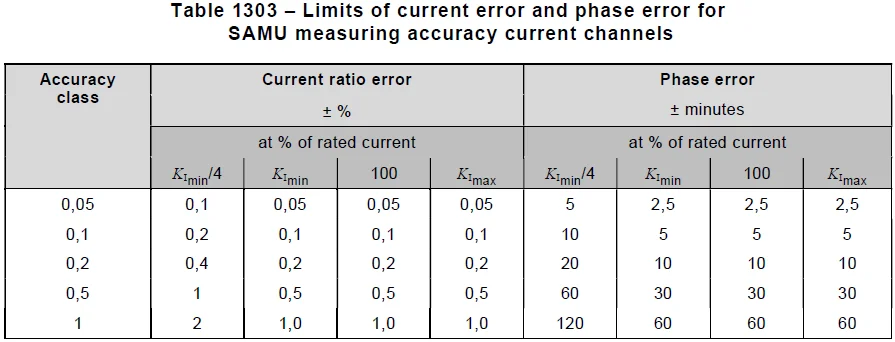
It is important that the test instrument pays attention to the amplitude and angle error limits for the digitizing channels of the Merging Unit. These limits are addressed in the IEC 61869-13 standard. Below is an example of a table from the standard that defines the maximum errors for the current channels of MUs/SAMUs.
Ideal Setup: Closed-Loop Configuration
- MU acts as PTP Grandmaster (or IRIG-B input provided);
- Test set injects analog signals into the MU;
- Test set subscribes SV frames via fiber or RJ45 to perform analysis.

Conprove Solutions
To meet all these needs, CONPROVE offers high-tech, high-performance, and robust solutions, ensuring safe and efficient testing for LPITs and all digital substation applications.
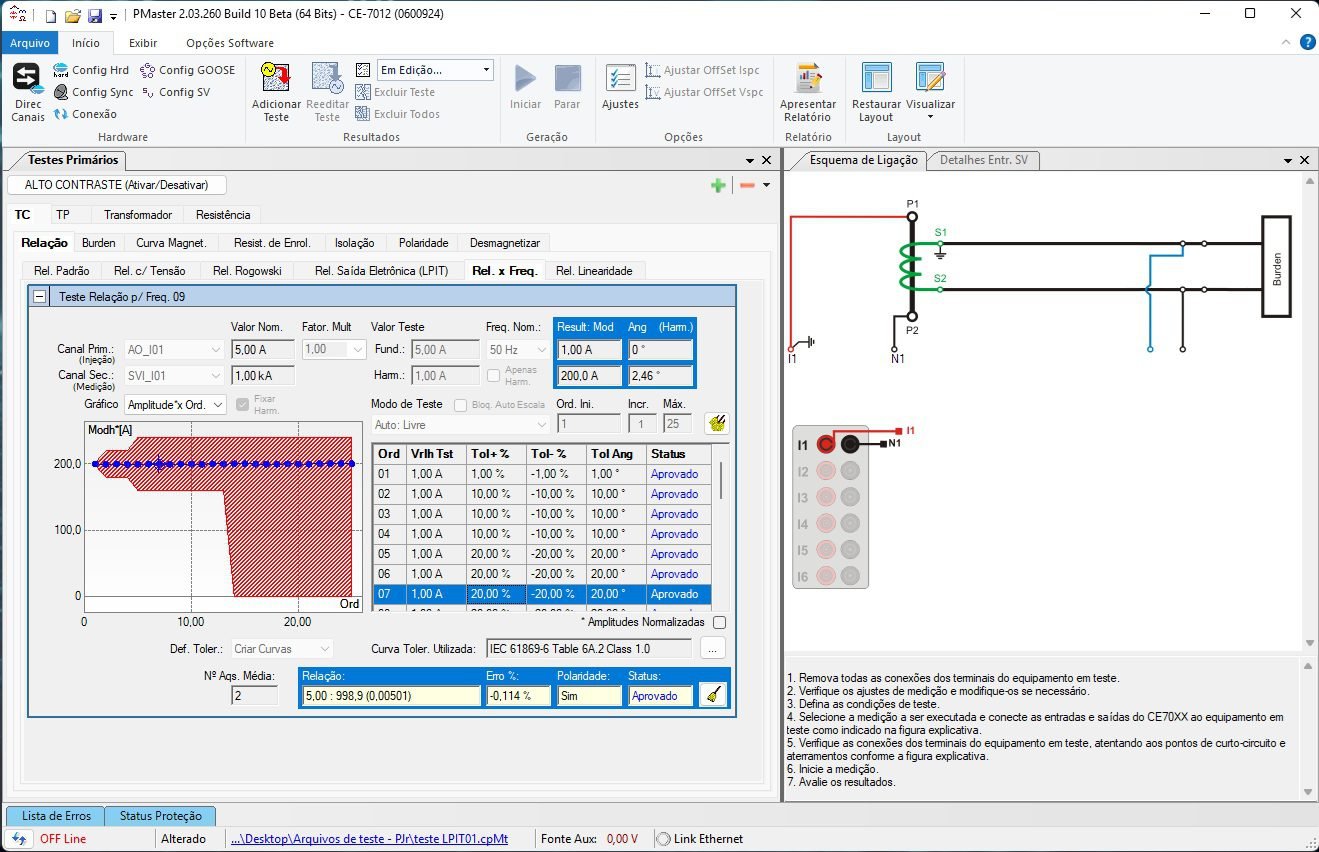
Below are examples of Frequency Response tests, Linearity, and SV Error Monitoring performed using Conprove’s solutions:
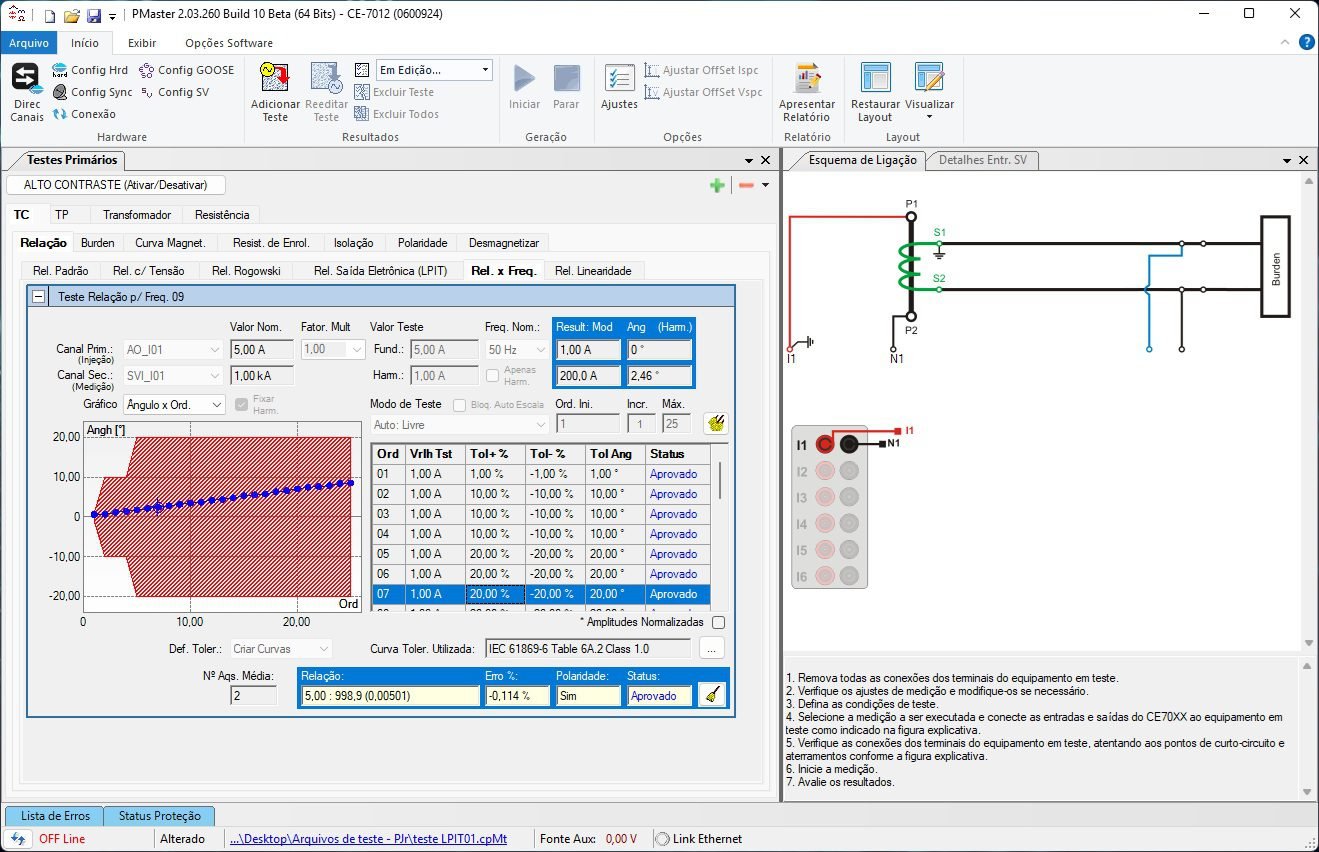
An example of a Linearity test with LPITs also performed using our solutions:
Also, an example of a Linearity and SV Error Monitoring test with LPITs using our solutions:
Finally, an example of a CT Ratio and SV Error Monitoring test with LPITs using our solutions:
CONPROVE offers a complete range of solutions to meet the testing demands of LPIT’s, with powerful tools capable of achieving the most demanding accuracy criteria required in the process bus by IEC 61850 and IEC 61869-9 standards. In addition, they offer automation features that optimize protection testing:
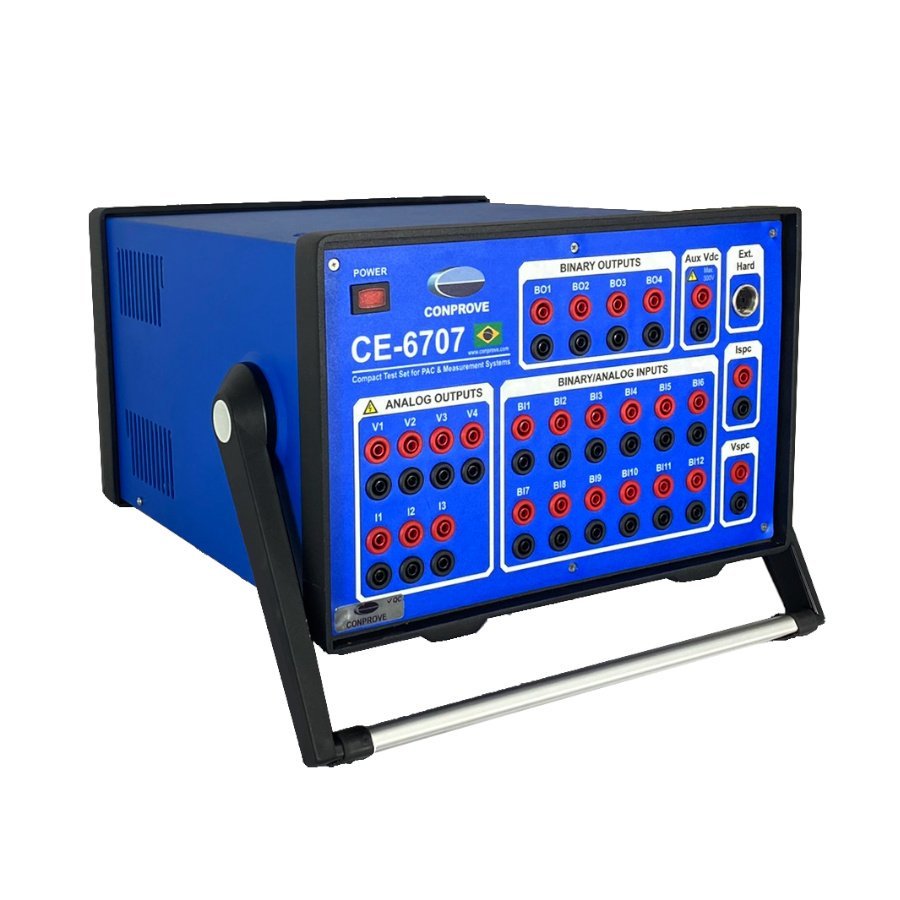
CE-6707: Universal Tester for Protection, Automation, Control, and Measurement; with Full Support for IEC-61850 / IEC-61869 standards;
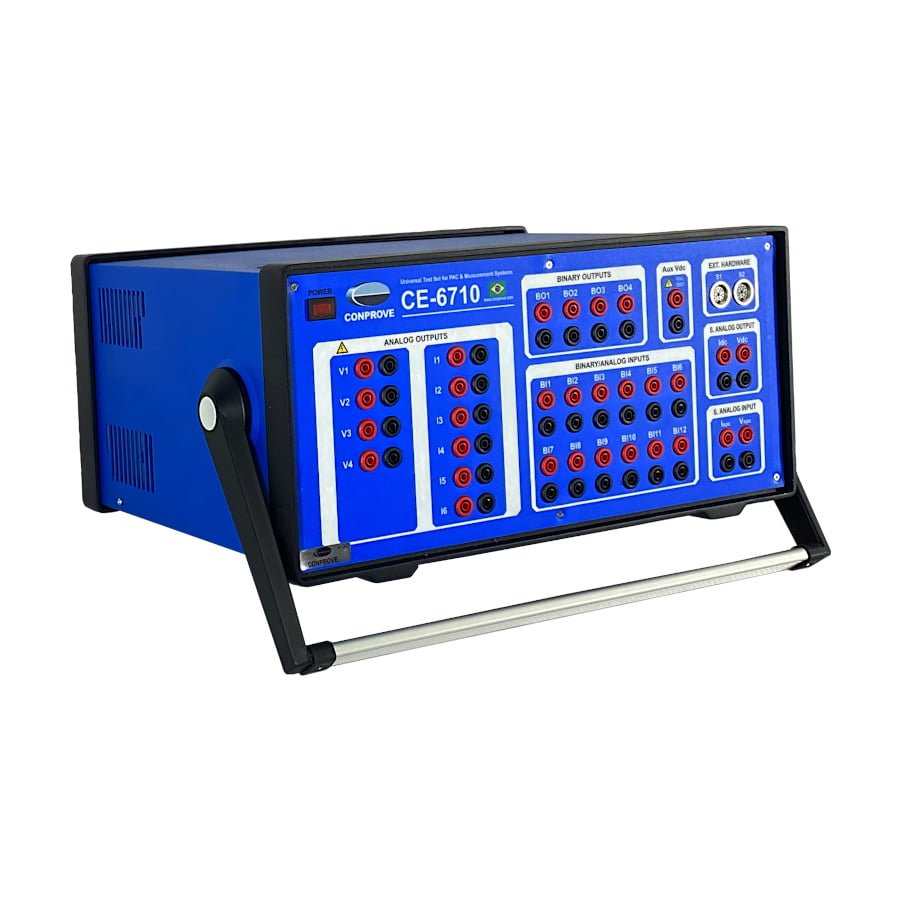
CE-6710: Universal Tester for Protection, Automation, Control, and Measurement; with Full Support for IEC-61850 / IEC-61869 standards;
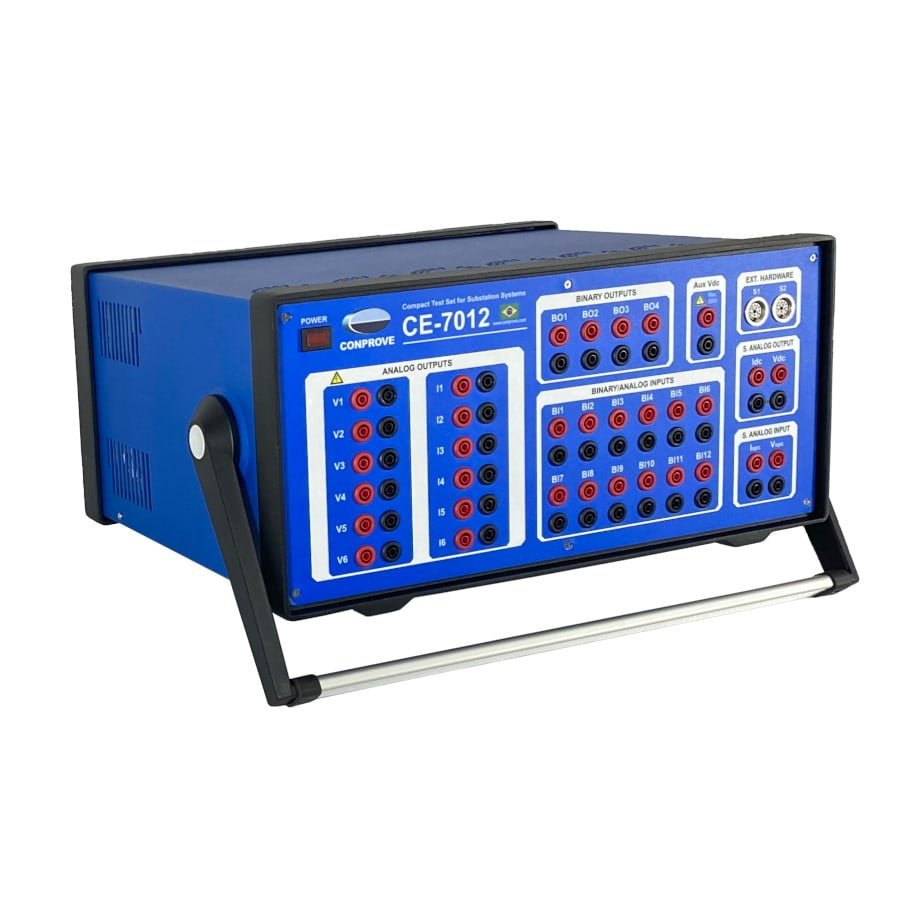
CE-7012: Compact Tester for Substation Systems (Primary and Secondary Levels) Microprocessed with Full Support for IEC-61850 / IEC-61869 standards;
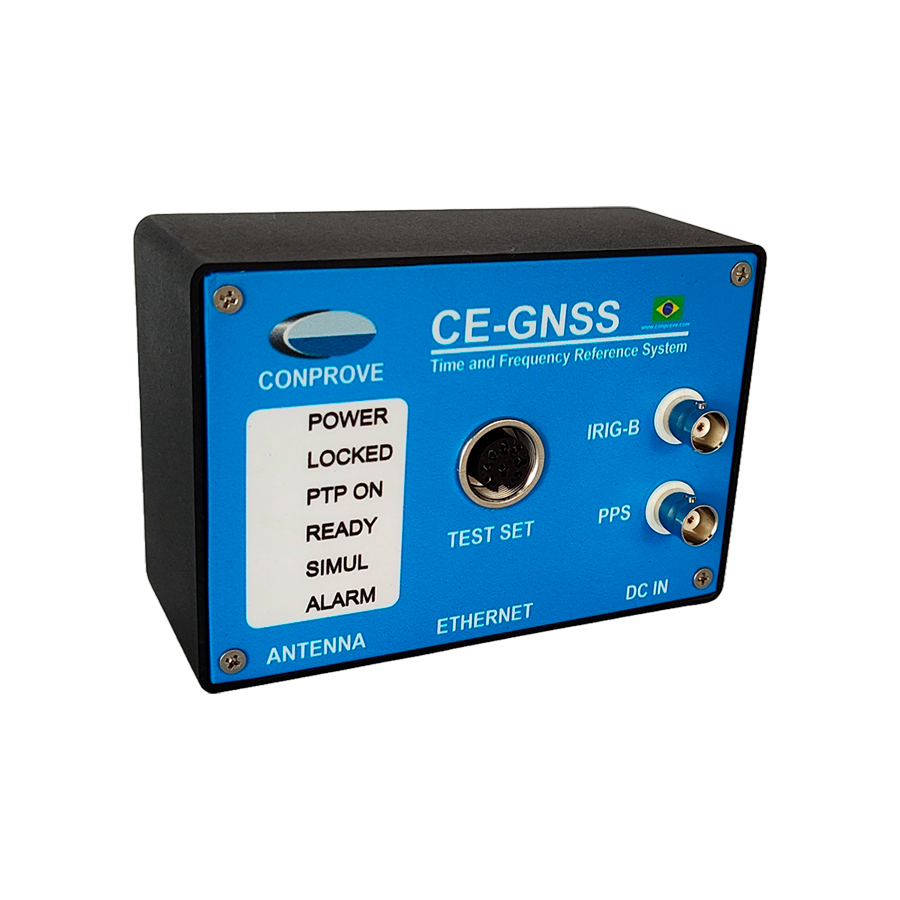
CE-GNSS: Global Navigation Satellite System | CE-GNSS – TIME & FREQUENCY REFERENCE SYSTEM;
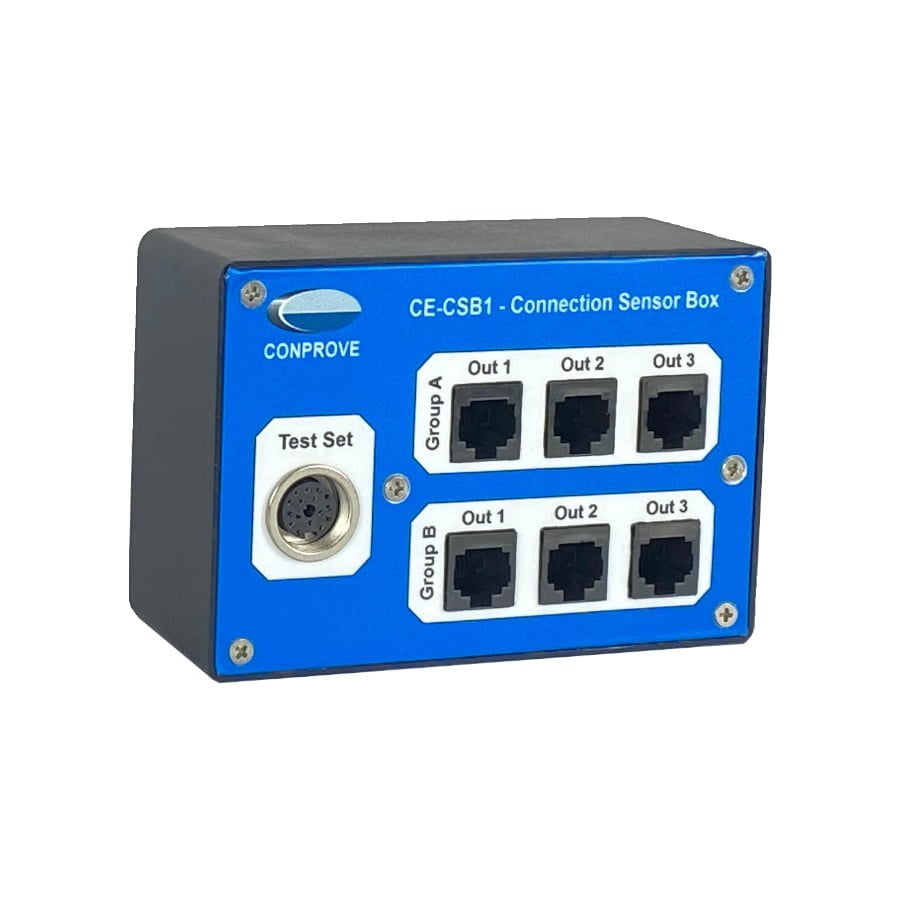
CE-CSB1 (Connection Sensor Box): Interface for Testing Devices with special input for Low Power Instrument Transformers (LPITs).